Prima Materia
Created by Marina Andrioti & Nada Yaakoub
Created by Marina Andrioti & Nada Yaakoub
Short Film
Master’s thesis produced for Cinematic and Videogame Architecture, The Bartlett School of Architecture, UCL.
Blender | Houdini | Unreal Engine 5 |
Adobe After Effects | Adobe Premiere Pro | Filming
Best Film Prize, Cinematic and Videogame Architecture Design 1
Written & Directed by:
Marina Andrioti & Nada Yaakoub
Music & Sound Design by:
Marina Andrioti, Nada Yaakoub & Kevin Pollard
Editing & Visual Development by:
Marina Andrioti & Nada Yaakoub
3D Modelling & Animation by:
Marina Andrioti & Nada Yaakoub
Prima Materia is an allegorical science-fiction film exploring the fixation on colonising Mars while Earth collapses under neglect. Wrapped in drone-released fog, the world is cast into darkness, written off as uninhabitable, discarded before its story is over.
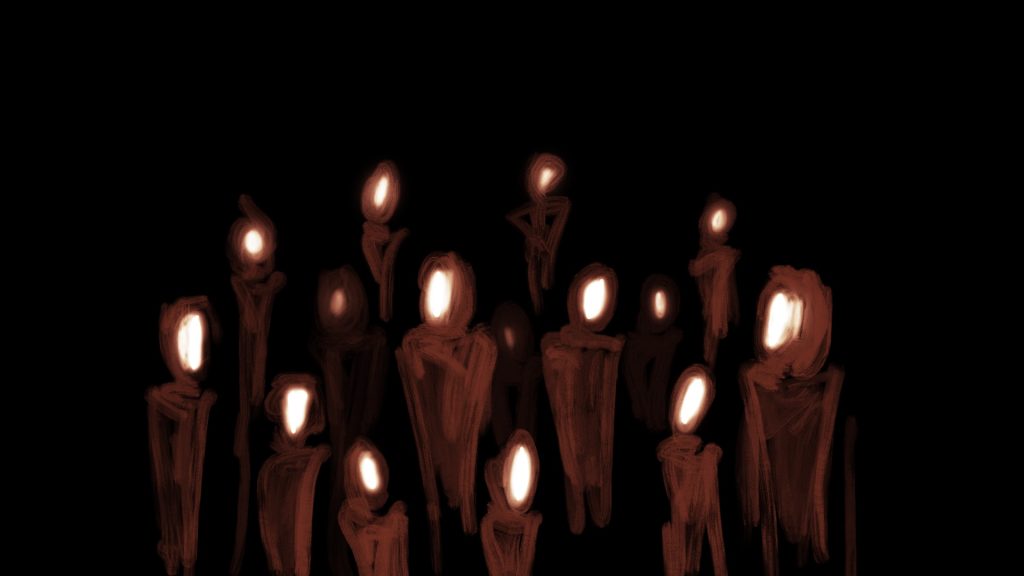
But beneath the rippled terrain lives a secret civilisation: the Light Bearers. Guardians of Earth, they preserve knowledge and memory through endurance, crafting a society sustained by adaptation rather than escape. At the center of their world flows liquid light, a luminous substance born from Earth’s transformation, acting as energy, memory, and spiritual essence.
Their architecture is carved directly into the altered landscape, shaped to harvest and balance this living resource. Their city glows from within, built on equilibrium and ritual.
Through this allegory, the film fuses Greek and Egyptian mythology with Hermetic philosophy, reframing design as both a cinematic and philosophical act of resistance. It imagines restoration through forgotten wisdom, asking not only how we survive, but how we choose to rebuild.
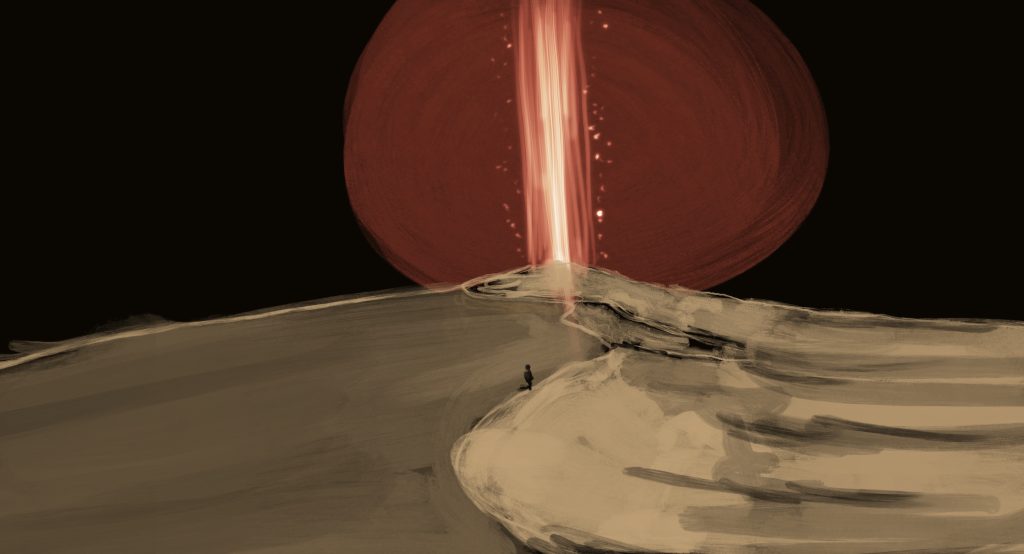
Our project is a three-chapter allegorical science fiction film set in a future where Earth has been abandoned and sunlight is blocked by artificial fog. Humanity has fled to Mars, believing Earth to be lost forever. Yet in the ruins, a hidden society remains, guardians of ancient knowledge striving to bring humanity back.
The story follows Leda, a traveller returning from Mars, who encounters the Light Bearers, luminous beings surviving in the shadows of a ruined Earth. Through her eyes, we witness their ingenuity and resilience.
At its core,
the film critiques the obsession with colonizing Mars, while Earth’s environmental collapse goes unaddressed.
The film criticises the present-day push for Mars colonization, arguing that it represents a misguided escape rather than a real solution. It examines the ethical and philosophical implications of prioritizing planetary escape over preservation, using Hermetic philosophy as a lens to critique contemporary approaches and imagine alternative paths for adaptation and restoration.
Rather than projecting visions of Mars, the film turns to history and asks:
What wisdom have we forgotten?
Hermeticism
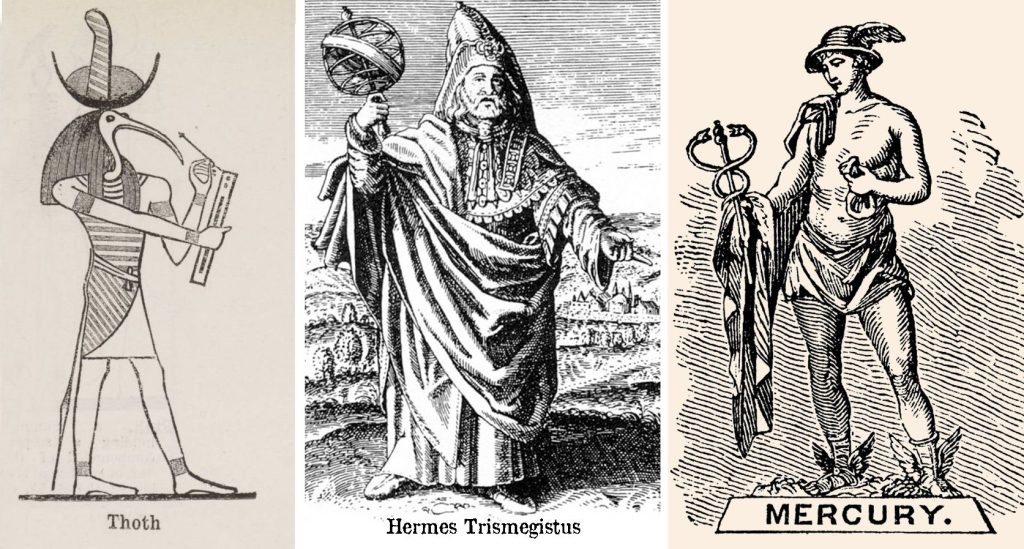
Hermeticism emerged in Hellenistic Alexandria as a synthesis of Egyptian and Greek intellectual traditions. Rooted in the attributed teachings of Hermes Trismegistus, the tradition weaves together alchemy, astrology, theology, and mysticism.
Central to Hermetic thought is the belief that the universe reflects a divine intelligence, and that the pursuit of knowledge enables both spiritual and material transformation. One of the core philosophies of our project is the Hermetic principle “As Above, So Below,” which suggests that what happens on a cosmic scale mirrors the microcosm.
This principle directly informs the allegorical design of the Light Bearers’ world: the land itself undergoes alchemical change, giving rise to a new raw substance, the Liquid Light, while the inhabitants evolve as expressions of this ongoing transformative process.
The First Matter
Another Hermetic concept is Prima Materia, the “first matter” — a raw, unformed substance from which all things originate, containing the essence of the universe before it takes shape.
In Hermetic alchemy, this process unfolds in three stages:
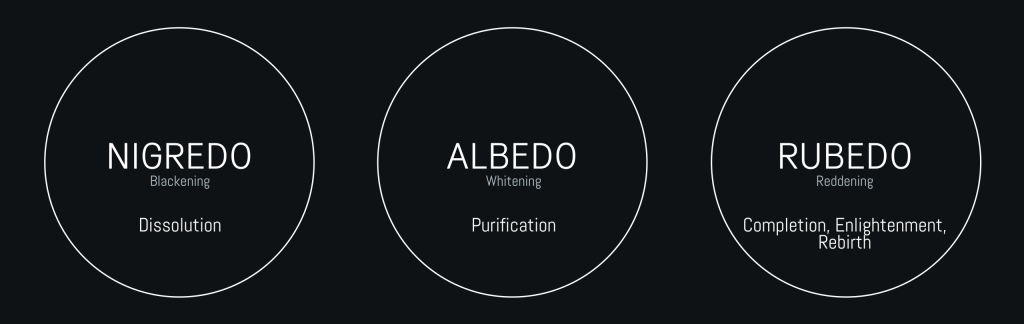
The film mirrors this rhythm: Nigredo depicts Earth’s collapse, Albedo follows resistance and Leda defying Mars colonization, and Rubedo reveals liquid light and Earth’s restoration, symbolizing environmental and spiritual transformation. The city and its inhabitants reflect this process, emerging through dissolution, purification, and renewal, with the Light Bearers embodying ongoing spiritual and material change.
These connections inspired a world where ancient wisdom could live again through motifs, architecture, glyphs, colors, and materials that convey meaning.
CULTURAL Design Cues
To shape our worldbuilding, we drew inspiration from Hermetic art, which fuses geometry, figuration, and dreamlike symbolism. Its recurring motifs include the sun, representing illumination and divine intelligence, and the eye, symbolizing perception and hidden knowledge. These symbols appear on suns, pyramids, and figures, reinforcing the connection between vision and spiritual insight.

Designing the Eye Pattern
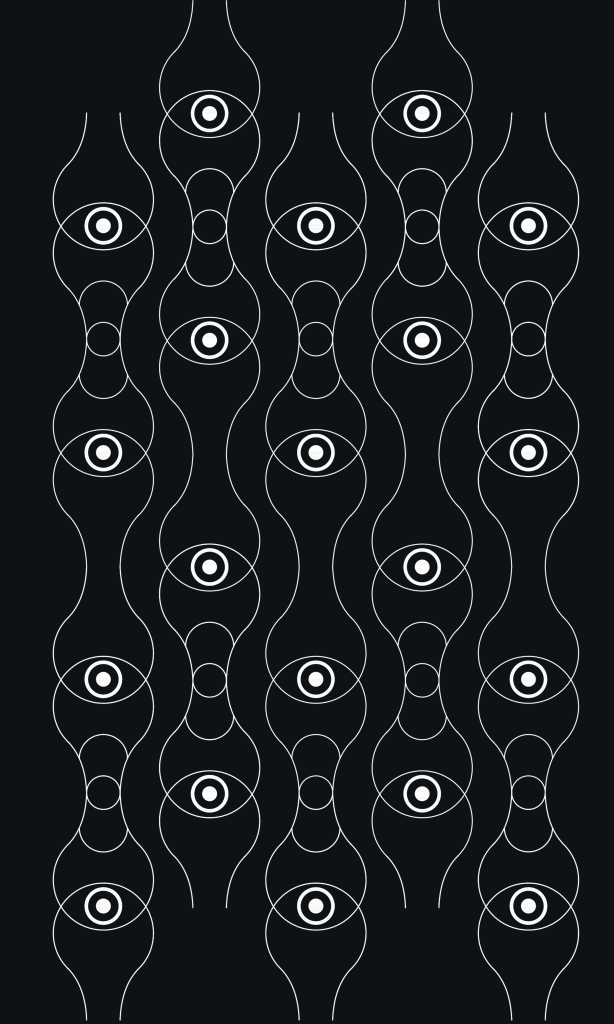
Building on these symbolic foundations, we developed a bespoke eye motif that bridges both the Hermetic tradition and the cultural significance of the eye in Egyptian and Greek contexts. The eye pattern in our film emerges from two interlocking circles: one gazing upward, representing “as above,” and one gazing downward, representing “as below.” Where these circles meet, an eye forms at the center as a symbol of protection and the union of higher and lower realms.


Materializing Meaning: Hieroglyphs
In both Egyptian and Greek traditions, inscriptions played a crucial symbolic role. They were not merely decorative, but acted as a bridge between the physical world and the spiritual one, conveying protection, identity, memory, and divine authority. Drawing from this shared heritage, the film reinterprets inscription as a worldbuilding tool. The aim was to craft a visual language that feels both ancient and futuristic, rooted in historical meaning yet belonging to no single culture.
Blade Runner 2049
Informed our use of setting and atmosphere, showing how color palettes and spatial mood define each world. Inspired by this, we use blue tones to evoke disruption and mystery, and warm orange tones to signal restoration and the emergence of light.
DUNE
Shaped our approach to symbolism and resources: its depiction of the spice as a hidden force guiding civilizations inspired our concept of ‘liquid light’ as a transformative substance. The Bene Gesserit, a secretive spiritual order, influenced the Light Bearers, guardians of ancient knowledge in our world.
Lawrence of Arabia
contributed to our framing and camera approach. Its sweeping desert landscapes, slow pans, wide shots, and subtle angles guided how we depict Earth’s transformed environment, emphasizing scale, emptiness, and the epic scope of the city and desert.
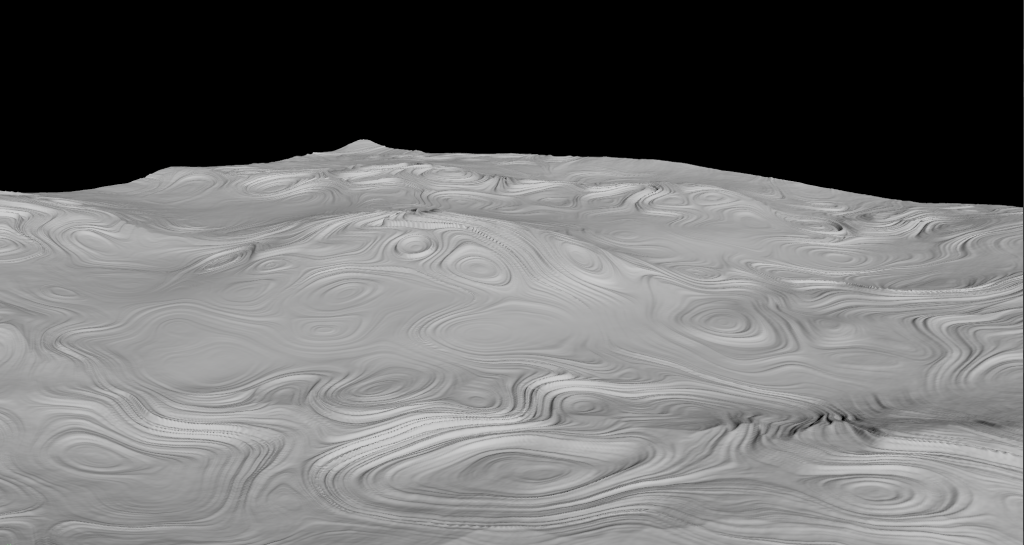
Earth is imagined as a living organism, silently calling for help as its land ripples.
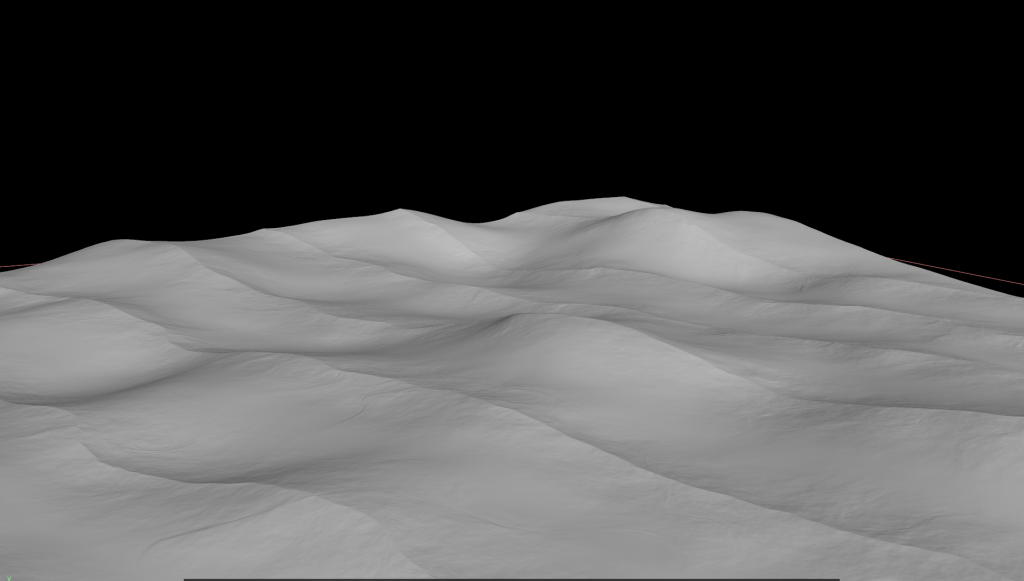
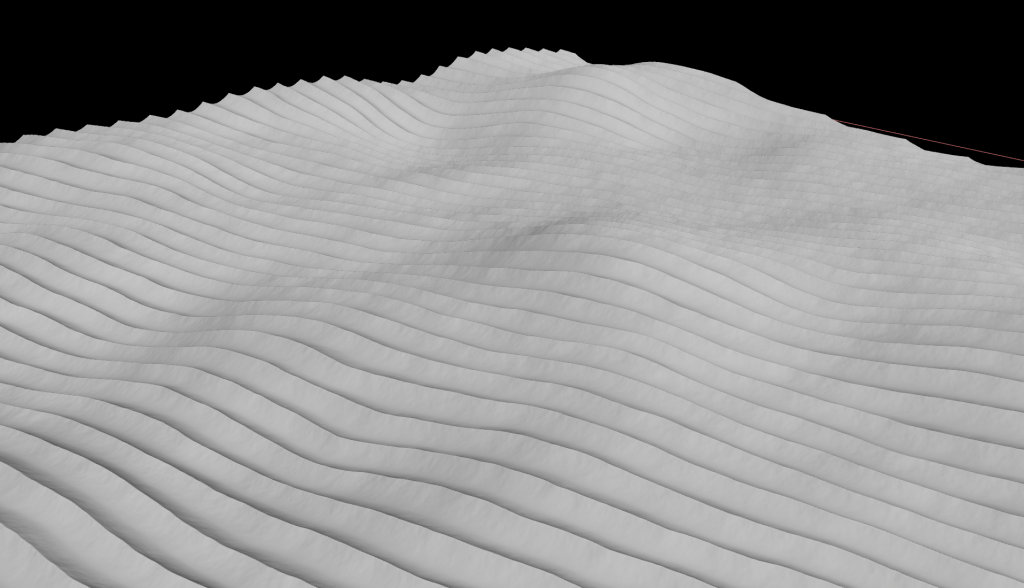
The desert’s movement is deployed as both a visual and narrative device, symbolising the planet’s pulse and emotional resonance. The ripples form the foundation for the film’s landscape and set the tone for its transformation.
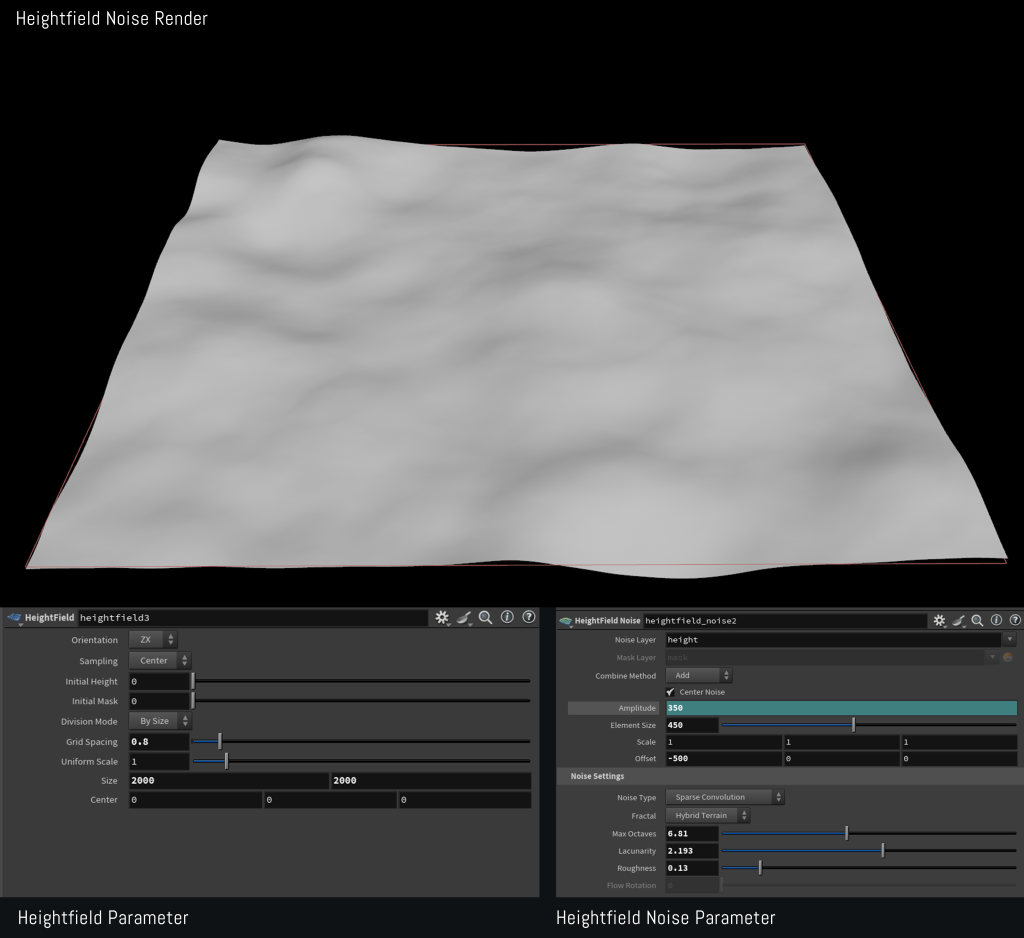
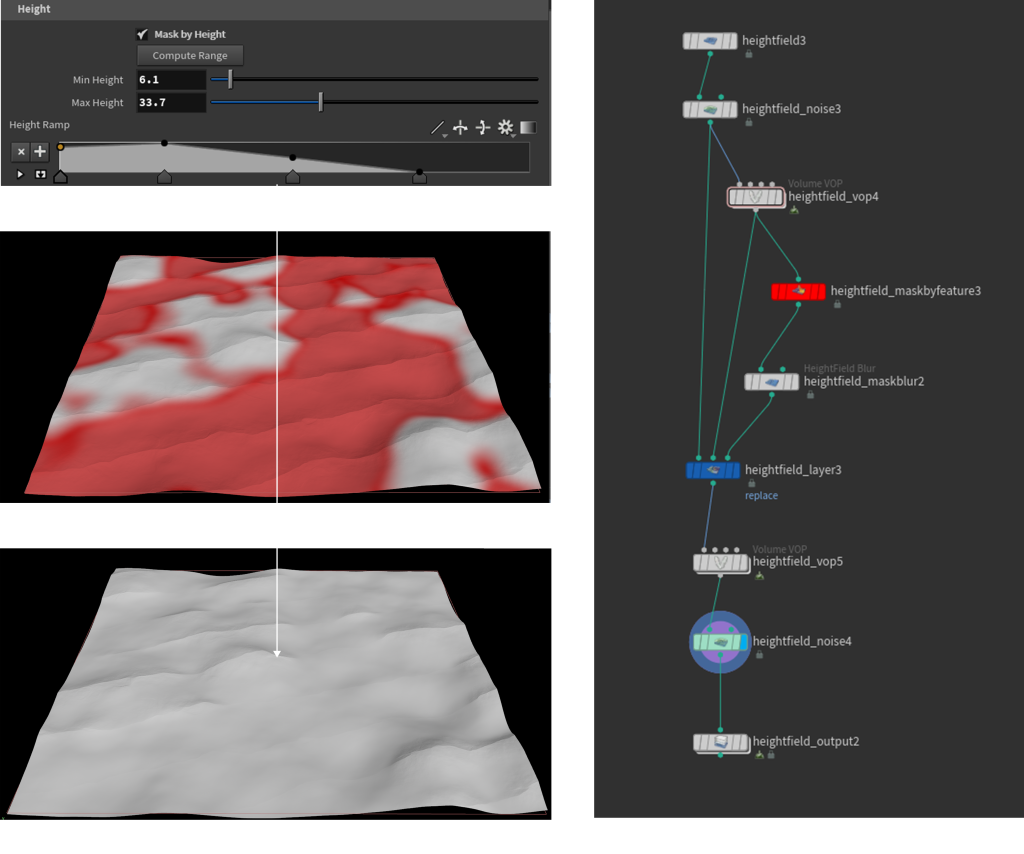
The desert environment was generated procedurally to capture the natural flow and erosion patterns of real dune landscapes. A heightfield served as the foundation, shaped using layered noise to establish broad dune formations. Additional distortion and detail were introduced through procedural nodes that mimic wind-carved ridges and subtle surface variations.
This approach allowed the terrain to evolve organically, creating a landscape that feels expansive, dynamic, and consistent with natural desert morphology while remaining fully adaptable to the needs of the scene.

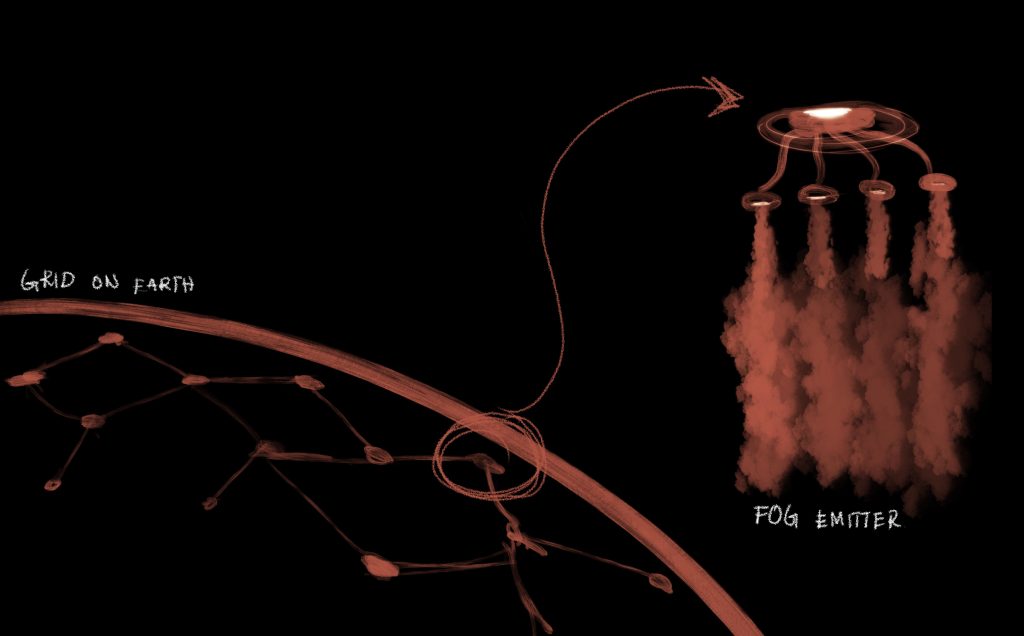
The drones serve as the central antagonists of the story, machines engineered by the ruling powers to block sunlight and maintain a world shrouded in darkness. Their design combines organic and mechanical influences: tentacle-like arms evoke an alien, invasive presence.
In the narrative, the drones lie buried beneath the desert, hidden from public knowledge. They rise only at night, releasing dense artificial fog that ensures Earth remains in a state of perpetual twilight. Their appearance, motion, and behaviour reflect their role as instruments of control, quietly rewriting the planet’s atmosphere while concealing the truth behind its collapse.
In several scenes, the protagonist walks alone through a desert scattered with fragments of ancient forms and drones, merging the collapse of technology with cultural memory. The landscape functions simultaneously as an archaeological site and a symbolic stage, foreshadowing the hidden civilisation she is about to uncover.
Visually, the scene draws from the atmospheric emptiness of Blade Runner 2049 and the monumental scale of Lawrence of Arabia. Wide, cinematic framings emphasize the desert’s surreal vastness, creating an environment that feels both timeless and otherworldly—a place where the past and future collide.
Liquid light is imagined as a new form of illumination born after natural and artificial light disappear as an alchemical response from the Earth itself.
Developed through material and simulation experiments, liquid light was conceived as a dense, luminous fluid shifting from yellow to deep red. Its physical presence evokes both wound and healing, making Earth’s grief and its final act of resistance tangible.
Liquid light is imagined as a new form of illumination born after natural and artificial light disappear as an alchemical response from the Earth itself.
Developed through material and simulation experiments, liquid light was conceived as a dense, luminous fluid shifting from yellow to deep red. Its physical presence evokes both wound and healing, making Earth’s grief and its final act of resistance tangible.
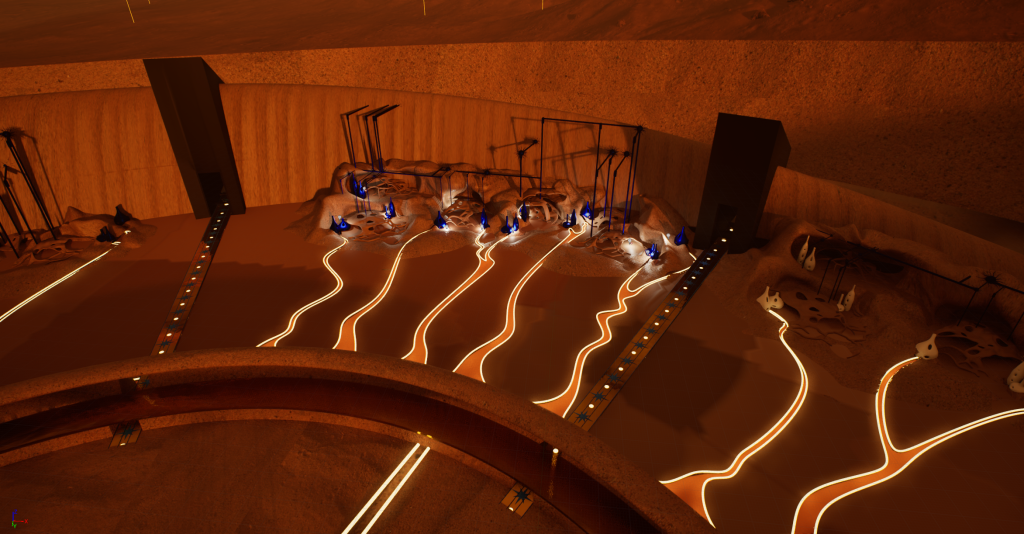
From deep within the Earth, liquid light shaped both landscape and architecture. Multi-level houses rise from the dunes, with vessels storing harvested light. Fog catchers hover above to gather water, while stabilizing orbs balance the energy. At the heart of the settlement, communal spaces support rituals and gatherings, and beneath the surface, a network channels liquid light to power the city
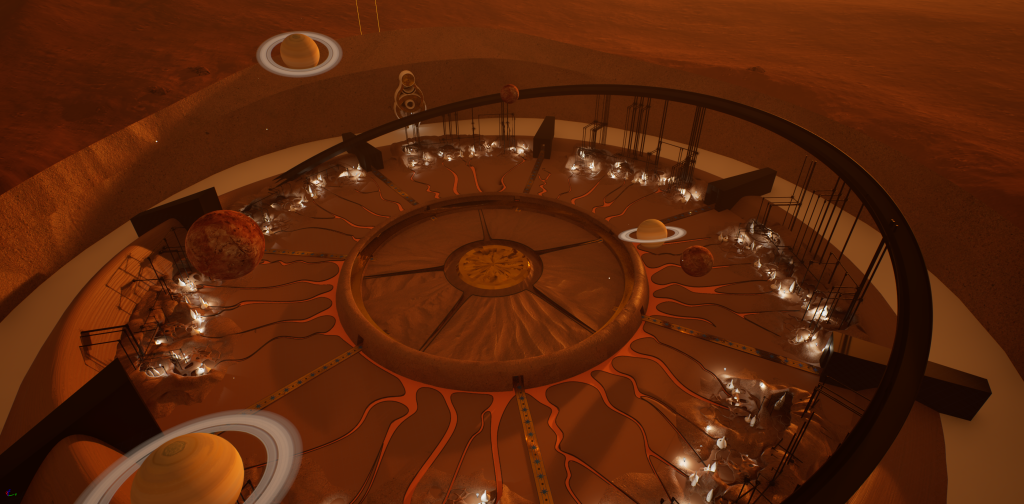
The city’s layout draws direct inspiration from a diagram found in the Voynich Manuscript, a codex often associated with Hermetic ideas of cosmology and hidden knowledge. The goal was to preserve the manuscript’s concentric, radiating structure and reinterpret it through the world’s narrative logic.
In this design, the terrain itself rises in circular formations, shaped by the drones’ lift-off patterns, creating a multi-ringed city that resembles an eye when viewed from above. From the central core, streams of liquid light flow outward across the landscape, echoing the manuscript’s radial forms while grounding them within the world’s mythology and environmental storytelling.

The gate marks the passage into the Albedo phase—a shift from darkness into light and the entrance to the city of the Light Bearers. Its monumental form draws from Egyptian pylons, symbols of rebirth and the rising horizon. Two tapered columns inspired by Greek architecture frame the threshold, engraved with inscriptions that guide the transition inward.
Inside, a sequence of corridors and sub-gates continues this progression, with arched forms referencing the fluted geometry of Greek columns and layered with an eye motif that filters light through perforated patterns. Inscriptions infused with liquid light pulse across the surfaces, turning the architecture itself into a living vessel of illumination.
The fog catchers reimagine real desert fog-net technology through the culture of the Light Bearers. Built from salvaged drone fragments, they collect moisture through a mesh that channels water into cloud-like reservoirs, distributing it throughout the settlement.
Beyond their function, the structures carry symbolic weight: Hermetic motifs [eyes, spirals, suns] are woven into their design, turning each fog catcher into a ritual monument that blends survival engineering with spiritual meaning.
The Light Bearers’ homes are carved directly from the landscape, echoing Egyptian rock-cut architecture. Each dwelling is powered by a vessel of liquid light at its entrance—an amphora-inspired form that channels energy through intake and release lines, recalling ancient Greek water systems. Subtle symbols and pigments turn these structures into luminous markers of knowledge, blending shelter with spiritual meaning.
The harvesting system channels liquid light from the city above into a protected underground space carved into the dunes. Four gated entrances lead into this hidden chamber, where a sculpted channel carries the light toward a cooling tower and into a central basin. Here, the liquid light is regulated, stored, and then redistributed through an underground network that powers the Light Bearer homes above.
Designed with principles inspired by hydraulic engineering, the system transforms raw, overwhelming energy into a controlled, life-sustaining resource.
To bring Leda to life, we filmed a friend against a green screen, capturing a range of poses and movements planned for the desert scenes. These recordings became the foundation for integrating her seamlessly into the digital environment during post-production.
This sequence was filmed but never shown in the final cut of the film. It reveals a secret council orchestrating Earth’s decline to accelerate humanity’s relocation to Mars. Beneath a single spotlight, the group discusses their plan: manufacturing the fog, controlling the environmental collapse, and steering society toward the belief that Mars is the only viable future. Shot in a single take with whip-pan transitions to heighten tension, the scene was originally conceived as the moment when the true motive behind the crisis is finally exposed.